
Applied Theatre
Institution:
University of BristolCountry:
United KingdomDiscipline:
Art, Performance StudiesLevel:
BADuration & intensity:
Semester course, 10 ECTSNumber of students:
20-40Societal need addressed
Need for inclusive cultural participation and creative initiatives due to limited access to arts for vulnerable groups and underserved communities.
Key competences for Democratic Culture
- Valuing cultural diversity and democracy, justice and equality
- Openness to cultural otherness and to other beliefs, worldviews and practices
- Knowledge and critical understanding of the self
About the course
Applied Theatre: Community Engaged Learning is a second-year undergraduate course within the Theatre & Performance Studies programme at the University of Bristol, UK. The course introduces students to the principles and practices of applied theatre, exploring how theatre and performance can be used collaboratively in community and educational settings to support creative expression, participation, dialogue and social engagement. Central to the course is an approach to learning through partnerships with local community, arts and educational organisations. Over the years, students have worked with a range of external partners, exploring how applied theatre practices can respond to different contexts, communities and needs. These partnerships enable students to connect their academic learning with practical, community-engaged creative work, contributing to activities that support cultural participation, creative expression and social engagement.
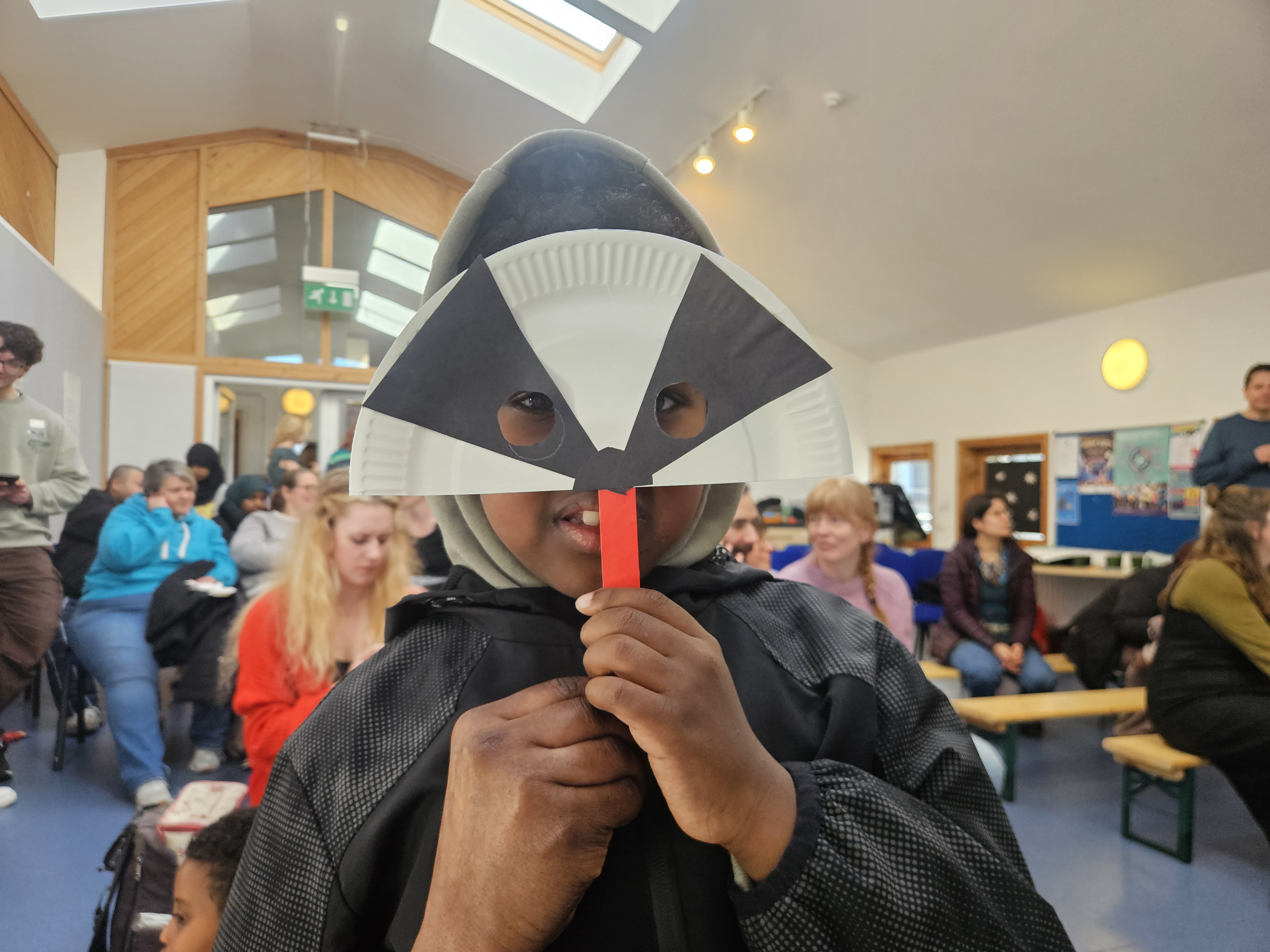
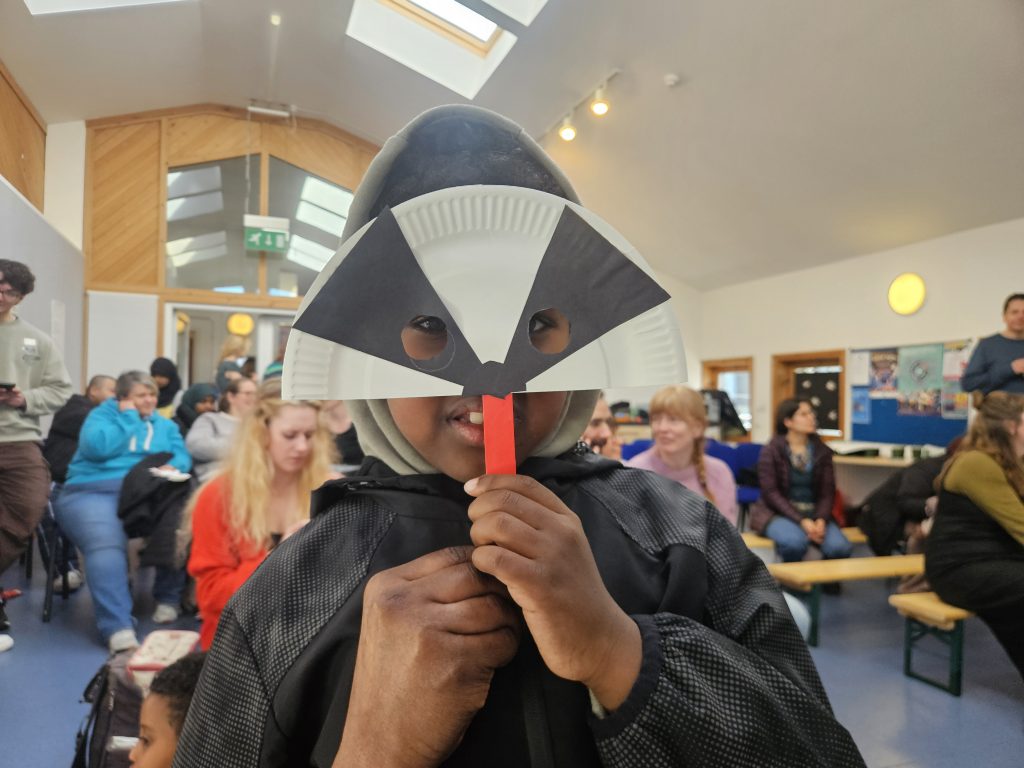
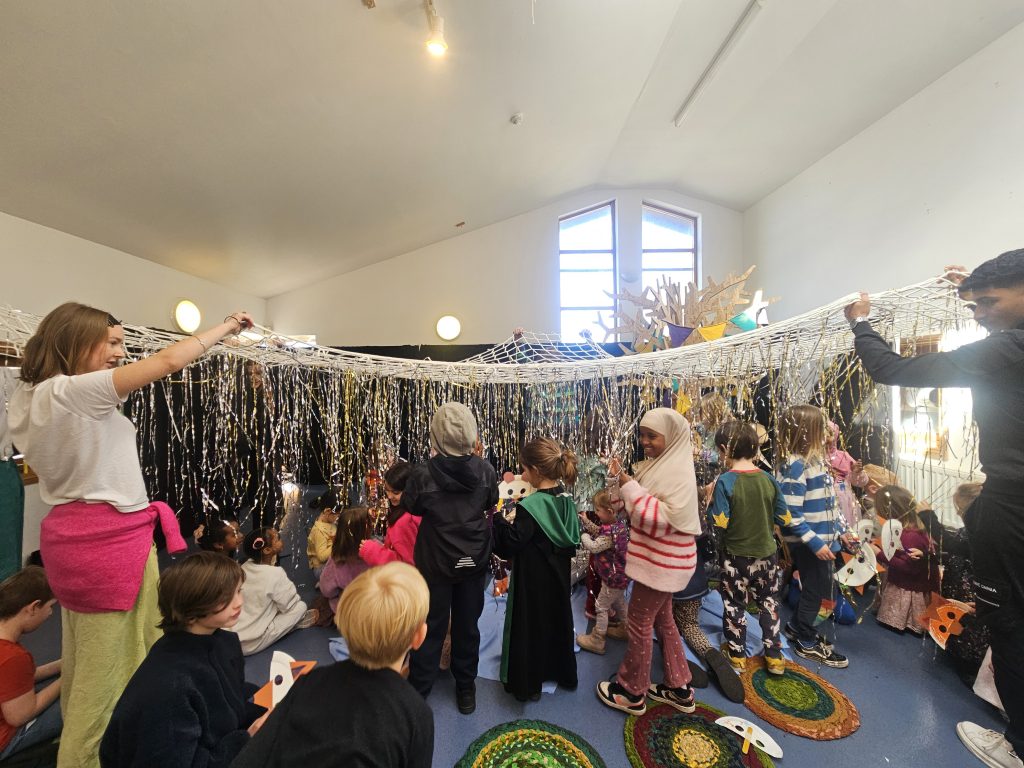
In recent years, the course has been in partnership with Travelling Light Theatre Company, a Bristol-based organisation creating theatre with and for children and young people. Students work alongside Travelling Light and local community partners to co-design and deliver an annual free Family Theatre Day at Wellspring Settlement in Barton Hill, Bristol. Together, they plan and facilitate performances, creative workshops and participatory activities for children and families. This provides students with an opportunity to apply their developing knowledge of applied theatre in a real-world context while contributing to an accessible cultural event for the local community. The partnership with Travelling Light also extends beyond this course, with final-year students able to undertake professional placements supporting the company’s work in local primary schools and youth theatre settings. This provides opportunities for continued engagement and helps sustain relationships between the University and its community partners.
The course adopts an experiential, collaborative approach to learning. Students engage with the theories, ethics and methodologies of applied theatre while developing practical skills in facilitation, creative producing, communication and collaborative working. Through their engagement with community partners, students are encouraged to consider questions of access, inclusion, representation and the responsibilities involved in creating performance with and for specific communities.
Ultimately, the course explores how arts-based service-learning can bring together academic learning, creative practice and civic engagement. Through partnerships with a range of community and educational organisations, students develop as reflective, socially engaged practitioners while exploring the potential of theatre to support participation, dialogue and meaningful engagement across different communities.
How are Competences for Democratic Culture developed?
The course’s approach to service-learning is particularly relevant to the development of competences for democratic culture. The critical and creative processes involved in planning and delivering participatory theatre activities encourage the students to listen, negotiate, share decision-making and value the contributions of others. Reflection is an important part of the learning process, encouraging students to connect their practical experiences with wider questions about the social role of theatre, cultural participation and the relationship between universities and their local communities.
Competences for democratic culture are developed through an integrated process of theoretical study, practical exploration, co-produced project work, and critical reflection. By embedding democratic values within both the content and structure of the course, students are not only learning about democratic culture but actively practicing it through collaborative, socially engaged theatre-making. A central focus is on co-production as a democratic practice, where knowledge is shared and negotiated between students and community partners. This approach challenges traditional hierarchies of expertise and fosters a more equitable, participatory model of learning and knowledge creation. By addressing barriers to arts participation and engaging with issues of access and inclusion, students develop an understanding of how creative practice can contribute to social change, postitioning them as active participants in the university’s civic mission.
"The most important lesson I learnt through the community engaged learning project was that some things work in theory but not in practice. Therefore, it is important to adapt and respond to your group’s needs, especially with young children. Understanding the groups needs and how they were responding to an activity was the most challenging part of the project because it required us to be constantly alert and adaptable. The best thing about the project was seeing both the children and their parents enjoy the activities we planned.”
"It has been a pleasure to work on this project. The teacher has allowed for learning to take place in a challenging and exploratory environment whilst creating a safe space for reflection and to learn from mistakes. Students have had the opportunity to appreciate the applicability of their creative skills in wider contexts and learned how adaptable they can be. I believe this project showcases an excellent example of authentic learning for mutual benefit.”
University-Community Partnership
Community partners involved
Partners have included Travelling Light Theatre Company, Bristol Refugee Rights, the University of Bristol’s Barton Hill Micro-Campus Little Library, Friends of Hillfields community groups, and local schools.
Co-definition of the social need
The specific need addressed (live brief) is developed in negotiation between the teacher and the partner organization(s). In the definition of the need, the practicalities, skills of the students and the specific needs and questions of the partner organizations are addressed.
Reciprocity & partner role
The focus of the course is co-production as a core pedagogical approach. Community partners are recognised as local experts, bringing deep knowledge of their communities, contexts, and challenges. Thus, students not only go out of their university, the community also comes in, as they provide expert seminars and contribute to the agenda-setting of the course topics. This way, the content and set-up of the course will be adapted depending on the partners involved. In the practice experience, students really focus on what is the added value for all beneficiaries, and learn to understand the relevance of different types of knowledge.
Pedagogical design
Curriculum integration
Applied Theatre: Community Engaged Learning is a second-year undergraduate optional module within the Bachelor programme Theatre & Performance Studies.
Learning objectives
- Students consider a range of community-based and socially engaged applied performance practices that take place outside of traditional theatre spaces.
- Students develop a critical understanding of the role of the applied theatre/arts facilitator in in a range of settings.
- Students will advance their knowledge of a range of professional applied theatre/arts companies/practitioners.
- Students explore approaches to facilitation and the practice of planning creative workshops or making performance work with/for specific groups or in specific settings.
- Students engage positively with local communities.
- Students develop their reflective skills, as they reflect upon their critical understanding of the role of the applied theatre/arts facilitator and upon their knowledge and understanding of a range of theoretical concerns within the field of applied theatre.
Service & learning activities
Service activities: Students work collaboratively with the partners to respond to a live brief: in 2025-2026 this was, designing and delivering a Free Family Theatre Day aimed at engaging children and families who face some of the highest barriers to accessing the arts. Other examples are poppet workshops, ‘play pack’ for creative play at home, creative arts activities with adults.
Learning activities: Through weekly seminars, students critically engage with key theoretical frameworks in applied theatre, including facilitation, ethics, participation, and theatre for social change. These are explored alongside practical workshops where students develop skills in facilitation, workshop design, and performance-making for specific groups and settings.
Active role of the student
Students take responsibility for shaping and delivering projects, making creative and ethical decisions, and adopting roles such as facilitator, producer, or project coordinator.
Reflection
Reflection takes place before, during and after the service activity. Students are encouraged to interrogate their assumptions, consider ethical implications, and reflect on how their identities and perspectives shape their practice. A strong emphasis is placed on the relation to students’ own power, positionality, and responsibility as emerging practitioners. Students really think about co-design and different kinds of knowledge. The reflection is also embedded in the creative process, making the art performance a reflective practice in itself.
Reflection methods:
- Individual critical analysis and reflective journal
- Group reflection through ethical questioning
- Art performance activities as reflective practices
Assessment
Assessment focuses on students’ ability to demonstrate critical understanding of applied theatre practices, apply theoretical frameworks in a community context, and reflect on their individual contribution and development as practitioner-researchers within a collaborative, socially engaged project.
Assessment methods:
- Presentation in group describing recommendations for the organization
- Individual critical analysis using a reflective method
Competences for democratic culture
Competences for democratic culture
Values
- Valuing cultural diversity
- Valuing democracy, justice, equality and the rule of law
- Valuing human dignity and human rights
Attitudes
- Civic-mindedness
- Openness to cultural otherness and to other beliefs, worldviews and practices
- Respect
Skills
- Analytical and critical thinking skills
- Co-operation skills
- Empathy
- Flexibility and adaptability
- Linguistic, plurilingual and communication skills
- Listening and observing skills
Knowledge and critical understanding
- Knowledge and critical understanding of the self
How are competences for democratic culture developed?
Competences for democratic culture are developed through an integrated process of theoretical study, practical exploration, co-produced project work, and critical reflection. By embedding democratic values within both the content and structure of the course, students are not only learning about democratic culture but actively practicing it through collaborative, socially engaged theatre-making.
Students work with diverse communities, including children and families from refugee and migrant backgrounds. Through co-produced projects, with community partners as equal collaborators, students learn to design inclusive and accessible creative work that respects and responds to different lived experiences. Through the community engagement, students develop sensitivity to participants’ needs and contexts, encouraging them to listen actively, value local knowledge, and adapt their approaches in response to these community needs and perspectives. Working in groups and in partnership with community organisations also requires shared decision-making, negotiation, and the ability to respond flexibly to changing circumstances.
By addressing barriers to arts participation and engaging with issues of access and inclusion, students develop an understanding of how creative practice can contribute to social change, postitioning them as active participants in the university’s civic mission.
Structured reflection supports students in examining their own power, positionality, fostering ethical and self-aware practice. Students critically evaluate applied theatre practices and theoretical frameworks, analysing how these intersect with real-world contexts and ethical considerations.
Outcomes & impact
Learning outcomes for students
The course aims to contribute to social justice and transformation, encouraging students to consider how applied theatre can address inequality and support community agency. The learning experience is also intellectually rigorous, requiring students to critically connect theory and practice throughout. The co-production model ensures that their learning is enhanced through the intertwining of academic knowledge and community knowledge, requiring negotiation, responsiveness, and reflexivity.
On successful completion of this course, students are able to:
- demonstrate knowledge and critical understanding of applied theatre practice and the role of the applied theatre facilitator.
- identify and deploy relevant theoretical and theatrical concerns within the field of applied theatre in the planning and development of an applied theatre/creative arts project for a specific setting.
- take responsibility as an individual practitioner-researcher whether working independently or within a collaborative group for decision-making and reflect on your individual contribution to an applied performance project.
- understanding of the principles of co-design and mutual benefit
Community impact
- Increased accessibility of theatre and performative arts for children, families and vulnerable groups, directly achieved through the student projects
- Increased participation of local residents and vulnerable groups in theatre and performative arts.
- Increased language skills of children
- Strengthening connections within the local community, with local organizations connecting with each other and reaching out to residents in the neighbourhood
- Impact within the institution: teacher and university staff engage in reflective practice about the positionality of the university and its civic mission
Challenges & conditions for success
Challenges
- Timing and non-flexibility of the university planning
- Workload for the teacher: communication with the partner organizations requires a lot of work, even before the course starts
Conditions for success
- Being flexible in the design of the course
- Take the time to really understand the needs and expectations of the organisations
- Student preparation and training